
Lakeland, Florida

Air Conditioning Repair in Lakeland, FL

Diagnosis and repair for residential cooling systems across Lakeland and Polk County.

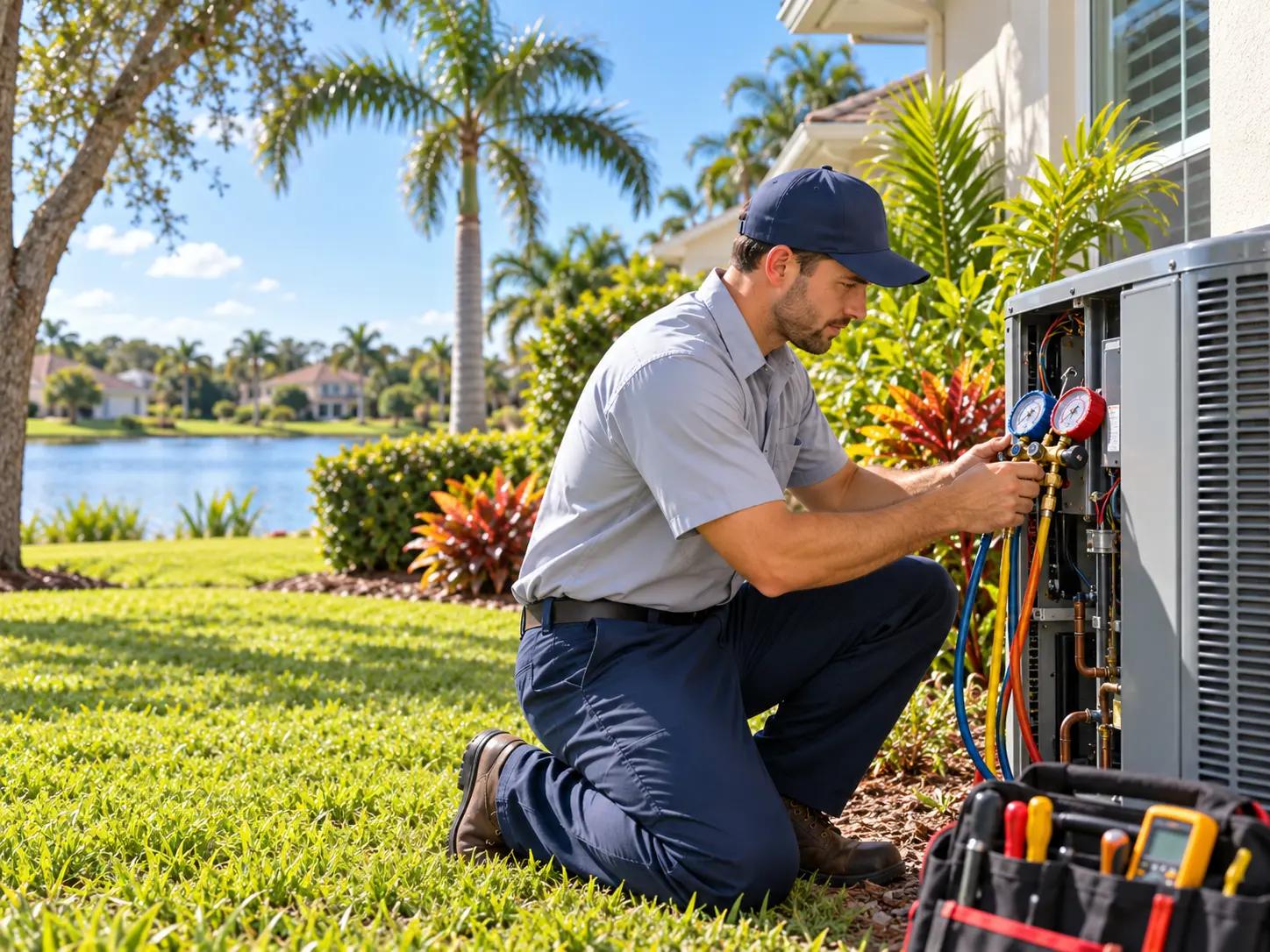
HVAC technician checking refrigerant pressures on a Lakeland home's outdoor AC unit

Most Lakeland cooling calls start the same way: the house is warmer than the thermostat setting and nobody is sure why. Air conditioning repair is really two jobs — finding the actual fault, then correcting it without creating a second problem somewhere else in the system.

A residential air conditioner is a loop. The indoor coil absorbs heat from your air, refrigerant carries that heat outside, and the condenser releases it. Electrical parts start and stop the loop, and the drain system carries away the humidity the coil pulls out. A failure anywhere in that chain shows up as the same complaint: the home will not cool.

Symptoms homeowners describe

  • Air from the vents feels close to room temperature
  • The system runs for long stretches without satisfying the thermostat
  • Outdoor unit hums but the fan does not spin
  • Breaker trips shortly after the system starts
  • Water near the air handler or a shut-off from the overflow switch
  • Rooms furthest from the air handler stay noticeably warmer

What a technician checks

  1. 1.Confirm the thermostat is calling for cooling and the correct mode is selected
  2. 2.Measure supply and return temperatures to see how much cooling the system is actually producing
  3. 3.Check filter condition, blower operation, and return airflow
  4. 4.Inspect electrical components for heat damage, swelling, or corrosion
  5. 5.Verify condenser fan and compressor operation and read system pressures
  6. 6.Check the condensate drain, pan, and safety switch

Possible causes

Possible causes may include the following. Confirming which one applies takes measurement, not guessing.

Failed run capacitor

A weak capacitor can leave the compressor or condenser fan unable to start, which is one of the more common Florida summer failures.

Pitted contactor

The contactor is the electrical switch that feeds the outdoor unit. Burned or stuck contacts cause intermittent or no operation.

Low refrigerant charge

Refrigerant does not get used up. A low charge points to a leak that should be located rather than simply topped off.

Restricted airflow

A loaded filter, dirty evaporator coil, or closed returns reduce capacity and can lead to a frozen coil.

Drain or float switch shut-off

A clogged condensate line trips the safety switch and stops cooling before water damages the home.

Thermostat or control fault

Wiring, batteries, or a failed control board can prevent a call for cooling from reaching the equipment.

Repair options

Component-level repair

Replacing a capacitor, contactor, float switch, or thermostat restores operation when the rest of the system is sound.

Airflow correction

Filter changes, coil cleaning, and duct or return corrections often recover lost capacity.

Refrigerant leak repair

Locating and correcting a leak matters more than adding refrigerant, especially on older equipment.

Major component work

Compressor or coil failures deserve a repair-versus-replacement comparison before committing.

What affects the cost

  • How long diagnosis takes on an intermittent fault
  • Part cost and availability for the equipment brand and age
  • Refrigerant type used by the system
  • Access to the air handler, attic, or closet
  • Whether more than one component has failed
See the full AC repair cost guide →

What you can safely check

  • Set the thermostat to COOL and several degrees below room temperature
  • Replace a dirty air filter
  • Confirm the AC breakers are on and not tripped halfway
  • Look for standing water in the drain pan
  • Make sure supply vents and returns are open and unblocked

Do not open electrical compartments or attempt refrigerant work. Those carry real injury risk.

Related pages

Questions about this repair

How long does an AC repair usually take?

Straightforward electrical repairs such as a capacitor or contactor are often finished in the same visit. Refrigerant leaks, coil work, and compressor issues take longer because the fault has to be located and verified.

Is it worth repairing an older air conditioner?

It depends on the age of the system, how often it has needed work, the cost of the current repair, and the refrigerant it uses. The repair versus replacement page walks through the trade-offs without pushing one answer.

Do I need to be home for the diagnosis?

Access to both the indoor and outdoor equipment is normally required, so someone should be available to let the technician in.

Ready to get your cooling back?

Describe what your system is doing and get a repair estimate for your Lakeland home.

Call NowGet Estimate