
How long does it take a frozen coil to thaw?
With the fan running it is often a few hours. A heavily iced coil can take longer, and the pan may overflow as it melts.
Lakeland, Florida
Ice on the indoor coil or refrigerant line means the system is out of balance.
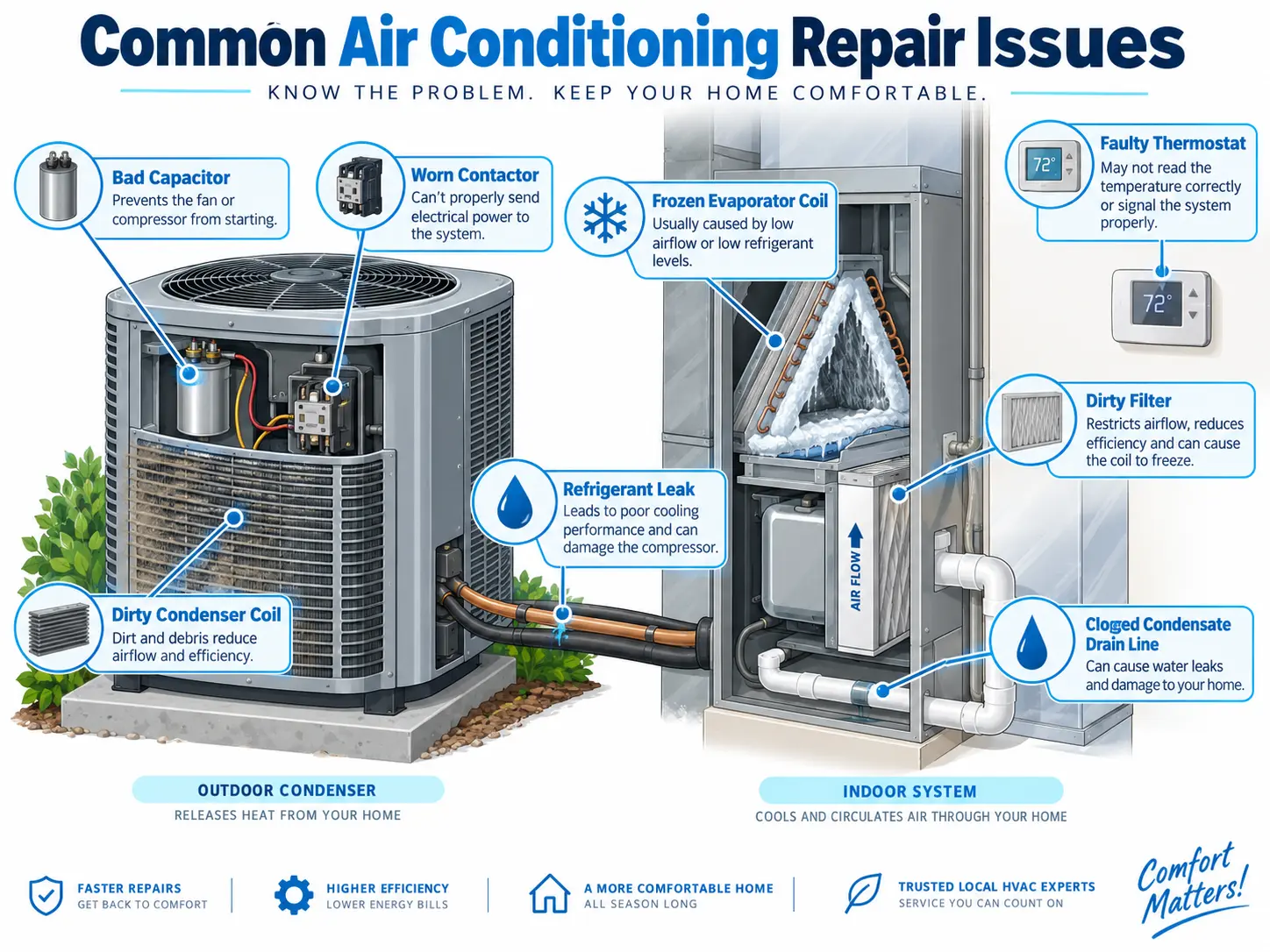
Ice forms when the evaporator coil runs colder than it should. That happens when too little heat reaches the coil — an airflow problem — or when the refrigerant pressure is too low, which usually means a leak.
Thawing the coil is the easy part. Running the system again without correcting the cause simply rebuilds the ice, and repeated freeze cycles are hard on the compressor.
Possible causes may include the following. Confirming which one applies takes measurement, not guessing.
A loaded filter, dirty coil, collapsed duct, or failing blower starves the coil of warm air.
Lower pressure drops the coil temperature below freezing, so condensation turns to ice.
A motor running at the wrong speed or a dirty blower wheel moves far less air than the design calls for.
Too many closed supply registers reduce total system airflow.
Operating the system when outdoor temperatures are low can push coil temperature below freezing.
Filter, coil cleaning, blower service, or duct repair.
Correct the leak, evacuate, and recharge to specification.
When the motor or wheel is the limiting factor.
Do not open electrical compartments or attempt refrigerant work. Those carry real injury risk.
With the fan running it is often a few hours. A heavily iced coil can take longer, and the pan may overflow as it melts.
It may cool briefly, but if the cause has not been corrected it will freeze again, often within a day.
Describe what your system is doing and get a repair estimate for your Lakeland home.