
Understand your cooling system
How Central Air Conditioning Works
An air conditioner does not create cold. It moves heat out of your home and dumps it outside. Once that clicks, most repair explanations make far more sense.
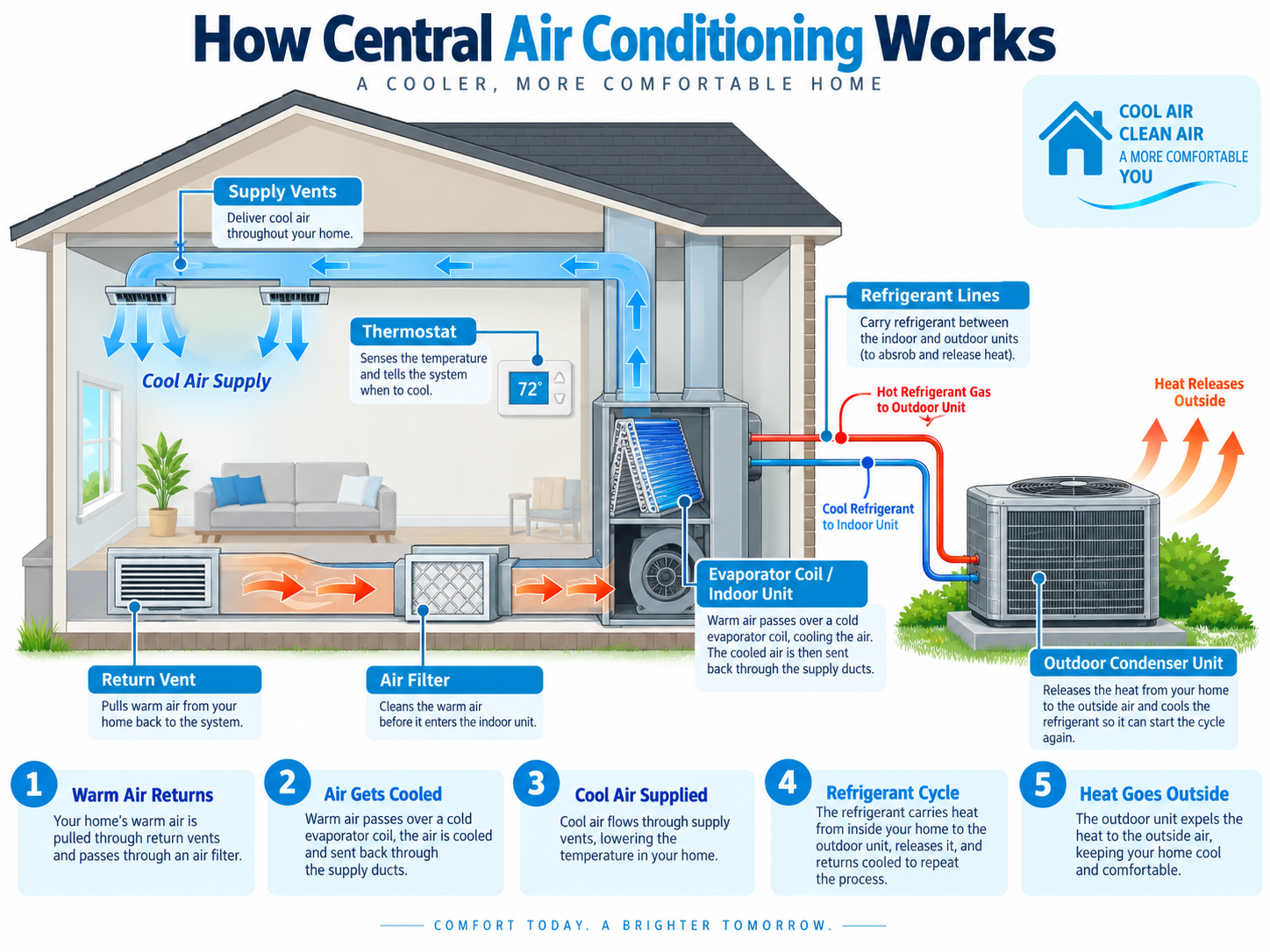
The cooling cycle in five steps
- 1
Warm air returns
Your home's warm air is pulled through return vents and passes through the air filter.
- 2
Air gets cooled
It crosses a cold evaporator coil, which removes both heat and humidity from the air.
- 3
Cool air supplied
The blower sends the cooled air back through supply ducts to the rooms.
- 4
Refrigerant cycle
Refrigerant carries the absorbed heat out to the condenser and returns cooled to repeat.
- 5
Heat goes outside
The outdoor unit expels that heat to the outside air, keeping the cycle going.
The parts that matter
Thermostat
Senses temperature and tells the system when to run. A control fault here imitates almost any failure.
Return vent and filter
Where air enters the system. Filter condition directly controls how much air the coil receives.
Evaporator coil and blower
The indoor half. Cold refrigerant absorbs heat; the blower moves the air across it.
Refrigerant lines
Carry refrigerant between indoor and outdoor units to absorb and release heat.
Outdoor condenser
Releases heat outside and cools the refrigerant so the cycle can start again.
Condensate drain
Carries away the water pulled out of your indoor air. Critical in Florida humidity.
Why this matters in Central Florida
Humidity control is half the job here. When the coil is cold and air moves across it at the right rate, water condenses out and drains away, and the home feels comfortable even at a moderate thermostat setting. When airflow or charge is off, you get a house that is technically cool and still feels damp.
It also explains why filters matter so much. The coil needs a steady stream of warm indoor air. Starve it and the coil temperature falls, condensation turns to ice, and cooling stops entirely.
Ready to get your cooling back?
Describe what your system is doing and get a repair estimate for your Lakeland home.